Field Note
It’s a fun time to be on the web again.
A conversation with Caila Schwartz at Dreamforce about building with AI, connecting Contentful to Storefront Next, and bringing agents into commerce. What interests me is how much sooner we can put an idea in front of someone and find out whether it helps.
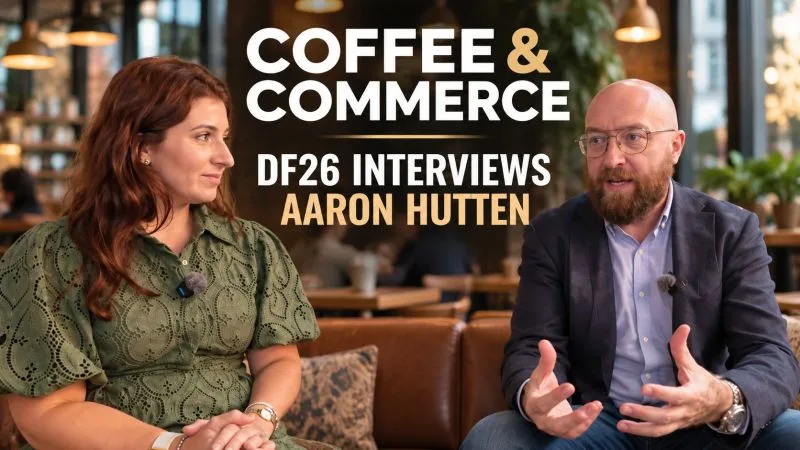
An hour before the conversation, I had Contentful running the content in my Storefront Next storefront.
Then I sat down with Caila Schwartz for Coffee & Commerce at Dreamforce and tried to explain why, after all this time building things on the web, I’m still excited about it.
That was a pretty good place to start.
Watch the conversation on Coffee & Commerce. It’s about six and a half minutes. We talk about AI-first development, commerce agents, and what happens when getting an idea working takes a lot less time than it used to.
Something to show while the conversation still matters
The Contentful example comes up about two minutes into the interview. I had something working that I could talk about while it was still fresh.
That matters to me. I learn by building. Give me a working system and I can start asking useful questions. Change the content. Follow the request. Look at what the customer actually sees. Find the part that looked simple until it touched everything else.
That is why I keep working on Après Studio. It gives me somewhere to put these ideas under a little pressure. A storefront has products, prices, content, payments, and people trying to get something done. Plenty of opportunities for a confident answer to be wrong.
AI makes more of those experiments practical. I can follow a question further before the cost of finding out becomes a project of its own.
The shopper and the person running the store
Later in the conversation, we get into merchant and shopper agents. I’ve been building on both sides.
With Juniper, I’m exploring how a shopper can move through a commerce experience with an agent involved. The Stripe checkout work follows that into the part where the customer actually pays.
On the other side, I’ve been working on marketing and merchandising from Slack. A team discusses a change, reviews what the agent proposes, approves it, and checks the storefront result.
Those are useful places to experiment because the person has a reason to be there. Buy something. Change an offer. Get the right content in front of a customer. I want to know whether the agent makes that work easier, and where someone still has to step in.
There is plenty left to do between a working experiment and a system a retail team can depend on. Being able to reach that next question sooner is part of what makes this interesting.
People need a reason to use it
Caila also asked what I’m hearing from clients. Adoption came up. How does this help the business, and how do you get people comfortable using it?
I think you start with work they recognize.
Pick the request that keeps getting handed off. The change that takes longer to coordinate than to describe. Give the person responsible a way to see what will happen and check what happened afterward.
That gives a team something concrete to judge. They can tell you whether it helped, whether they trust it, and which part still makes their day harder. I would rather have that conversation than ask people to be enthusiastic about AI in general.
Still here, still building
There’s a point in the interview where I say:
It’s a fun time to be on the web again.
I meant it. I started by viewing source and changing things to see what happened. I still want to get my hands on the system and find out.
Now I can get further with an idea while I’m still curious about it. And I can put something in front of another person sooner and ask whether it makes their work better.
That’s a good reason to keep building.